The new feature of the second season has become yet another source of scandals and shouting.
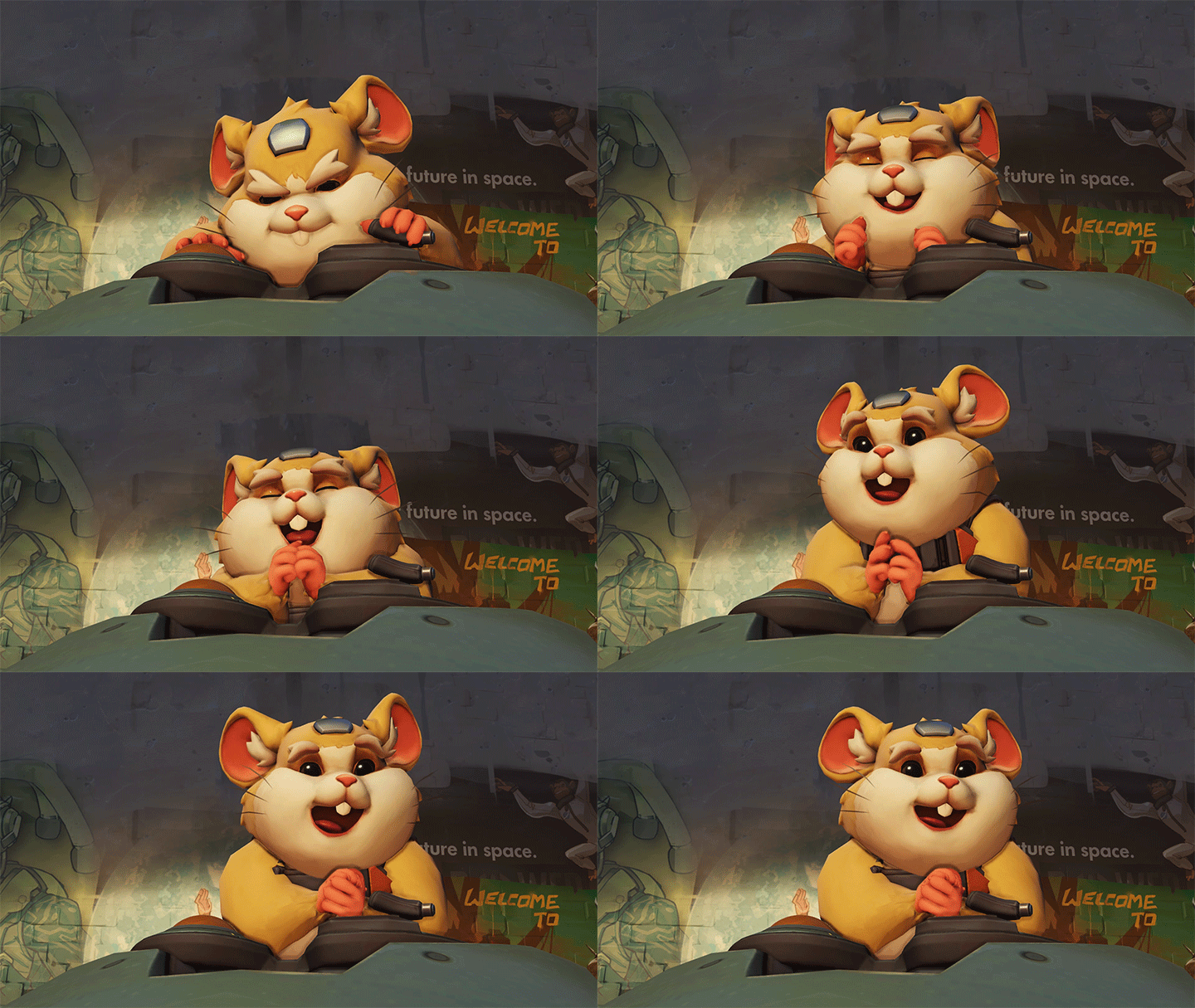
With the release of Overwatch's second season, along with a new hero and balance changes, an experimental option appeared: voice chat with the opposing team immediately after the match. The idea was conceived as a way to encourage "sportsmanlike" communication, but in practice it turned into a surge of conflicts.Blizzard presented the innovation as a tool for more lively and positive communication — so that players could exchange compliments and impressions by voice, rather than through dry text messages. However, the developers clearly underestimated how heated the atmosphere can be after a match.Judging by popular clips on social media, a significant portion of players use the post-match channel not at all for "GG." Instead, the broadcast is filled with shouting, mutual insults, and boasting about rank. Notably, those who shout the loudest are often immediately shown in a bad light when it becomes clear that their confidence does not match their gaming skills.At the same time, not all games are chaotic: many users complain that their lobby after the match is met with oppressive silence — people are simply shy to speak or don’t know how to start a conversation. Against this background, a theory has emerged that Blizzard deliberately tried to "deprive" toxic players of the anonymity of text and force them to speak aloud, so that a sense of shame would kick in. So far the effect is de…
games
Post-match voice chat in Overwatch was supposed to reduce toxicity — it turned out the opposite way
naiwa
The new feature of the second season has become yet another source of scandals and shouting.